On Product Hunt, few launches carry the weight of an OpenAI model release. The company’s page already sits at a near-perfect 5.0 from hundreds of reviews, and its 48th launch lands with characteristic drama. GPT-6 Astra is not a point upgrade. OpenAI positions it as “a new generation of intelligence,” the world’s most intelligent and aligned model, and the first system that has some of its leaders willing to talk seriously about the start of the AGI era.
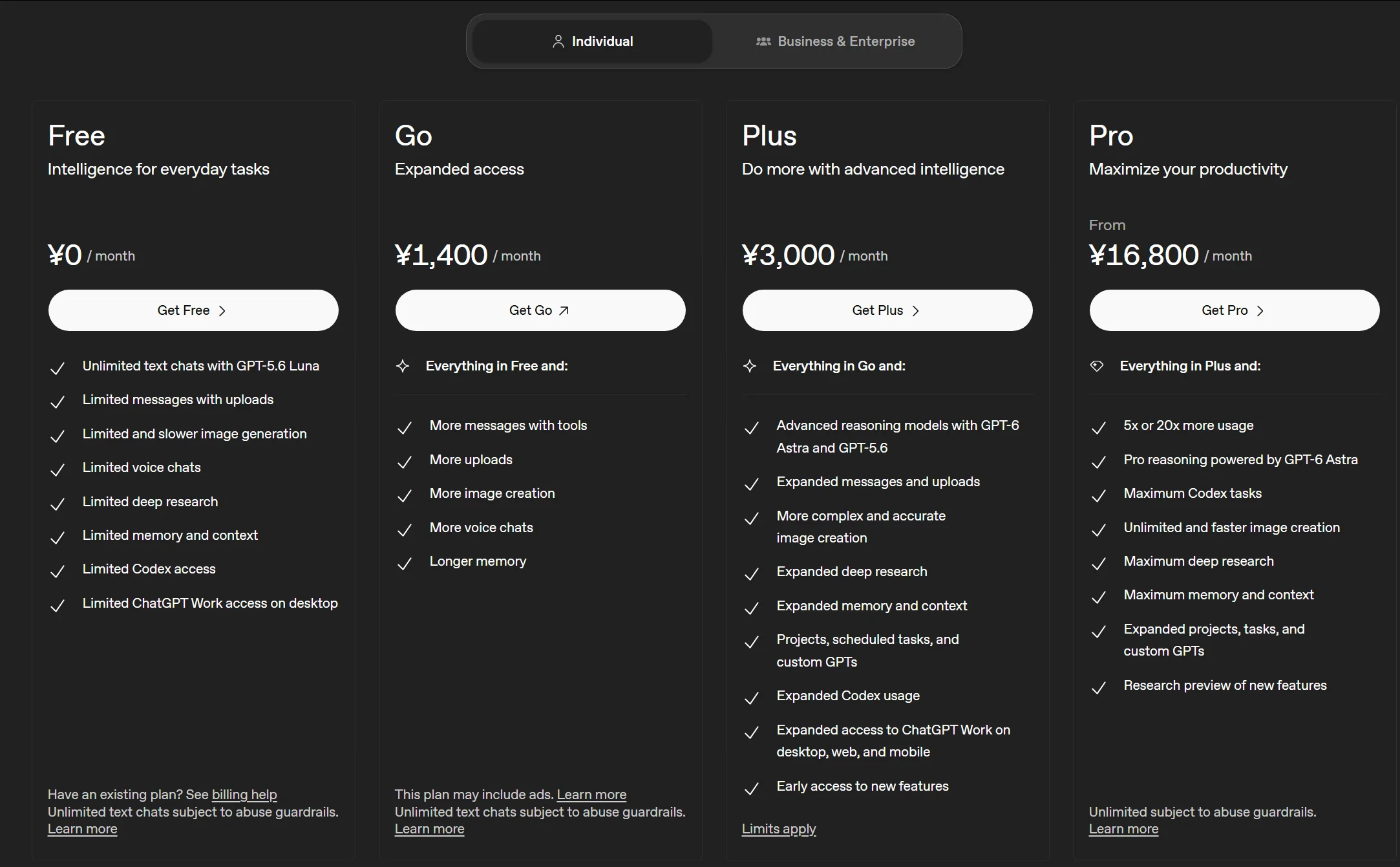
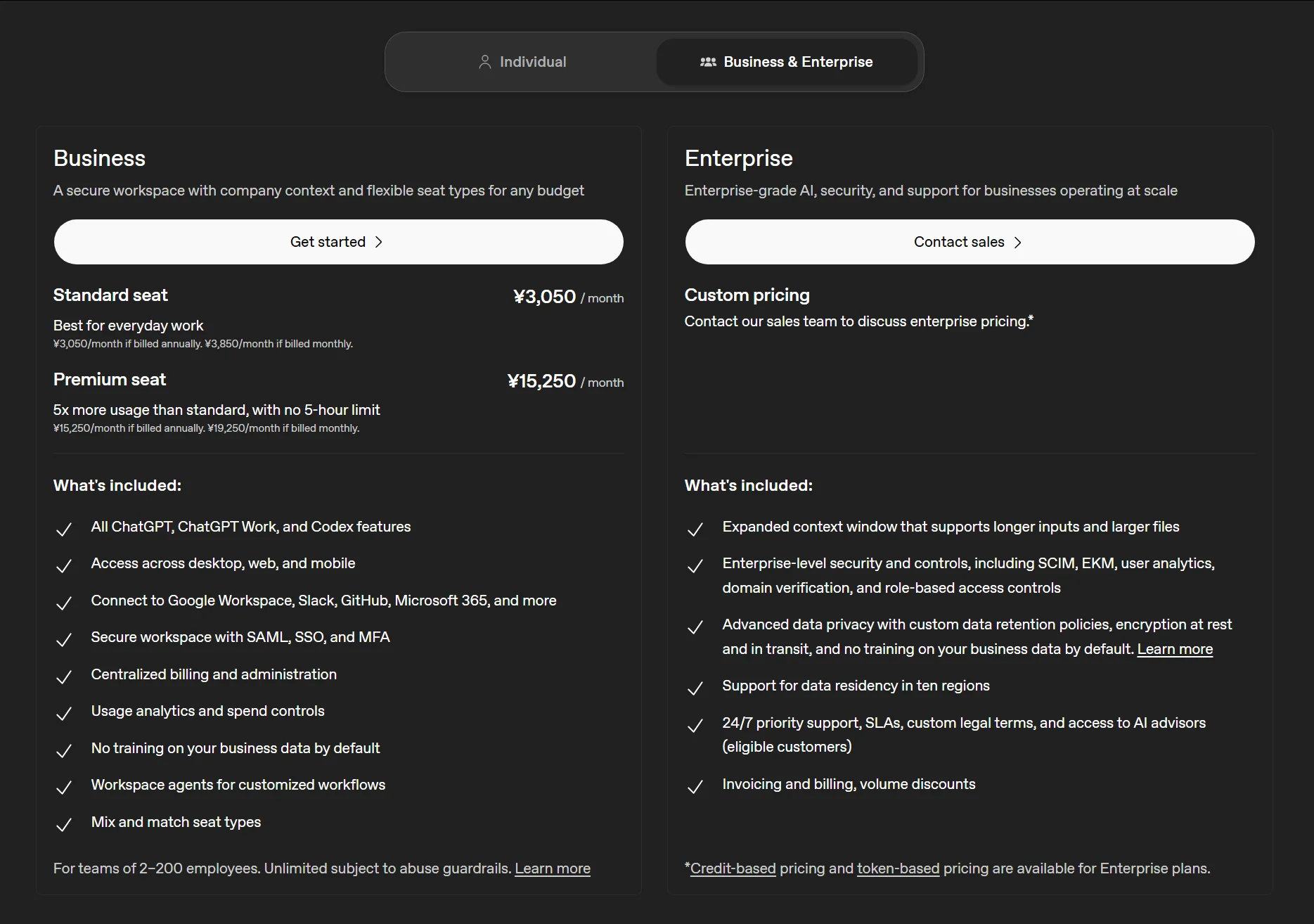
Released in limited form on September 3, 2026, and rolling out rapidly to ChatGPT Plus, Pro, Business, and Enterprise users, the OpenAI API, Microsoft Azure, and AWS Bedrock, Astra is already generating the kind of early-adopter fever that defined earlier GPT moments. This review examines the product from every angle that matters to Product Hunt readers: capabilities, benchmarks, real-world utility, developer experience, pricing, safety, limitations, and whether it lives up to the hype.
What Exactly Is GPT-6 Astra?
Astra is OpenAI’s flagship frontier model, successor to the GPT-5.6 family (Sol and siblings). It is optimized for end-to-end professional work rather than pure conversation. The company emphasizes computer use, browsing, software engineering, cybersecurity, science, and multi-step professional workflows. Official materials describe it as the best model OpenAI has shipped for agentic tasks that require planning, tool use, judgment, and polished outputs.
Key technical specifications:
- Context window: 1,050,000 tokens (with maximum input around 922,000 and maximum output of 128,000 tokens).
- Knowledge cutoff: April 30, 2026.
- Input modalities: text and image.
- Output: text (with strong multimodal reasoning).
- Model ID in the API: gpt-6-astra.
- Reasoning effort controls: low, medium, high, xhigh, and max.
- Features include streaming, structured outputs, function calling, file search, web search, prompt caching, and computer-use tools.
The model was trained at unprecedented scale—“by far our largest scale training run,” according to OpenAI research leadership—with heavy investment in pre-training, reinforcement learning, and alignment. It is the first OpenAI model to reach the “Critical” cybersecurity capability threshold in the company’s Preparedness Framework, which has implications for both power and access controls.
Core Strengths: Computer Use and Agentic Workflows
The standout claim is that Astra is the world’s best computer-use model. OpenAI demonstrates it filling online forms, updating CRM records, organizing calendars, conducting research and drafting results into email or documents, building and QA-testing websites, installing and troubleshooting software, and performing complex desktop tasks. In latency simulations on OSWorld 2.0, it scored 72.6% while taking roughly 40 minutes per task, versus GPT-5.6 Sol’s 65.7% at about 75 minutes—higher performance in roughly 47% less time.
On Agents’ Last Exam (complex professional tasks in real software, from financial modeling to engineering and media production), Astra reached 59.3%, edging Claude Opus 5 (55.5%) and Sol (53.6%), while using approximately 65% fewer output tokens than Opus 5 at peak settings. Combined with an updated Codex harness, task completion on Mind2Web is reported as 1.9× faster than the previous Sol experience.
These numbers translate into tangible demos: Astra performing PCB layout in KiCad (turning schematics into manufacturable boards), modeling houses in Blender and exporting walkable scenes to Unreal Engine 5, generating playable games from prompts, and handling everyday knowledge work faster than a human could. Early partners such as Cognition (Devin) reported state-of-the-art results on internal benchmarks out of the box, with clearer videos and more concise reports.
For Product Hunt builders and operators, this is the real product pitch: Astra is not just answering questions; it is executing multi-step workflows across applications with improved judgment about when to proceed, when to ask clarifying questions, and when to stop.
Software Engineering and Coding
Astra is positioned as OpenAI’s strongest software-engineering model to date. On Terminal-Bench 4.0 it scored 57.9% (versus 37.3% for Sol and 55.8% for Claude Fable 5.1), often at lower estimated API cost. Independent and partner commentary highlights better communication during agentic coding sessions, code that requires fewer iterations to reach production quality, and improved trading of intuition versus verification.
A notable new capability in Codex is experimental long-session memory: instead of pure compaction (which can lose nuance), Astra can maintain searchable notes across context windows. This helps with large refactors, multi-day debugging, and complex feature work where earlier decisions and failed experiments matter. Partners such as Jane Street and Lovable reported clear gains on internal coding and “trading intuition” evaluations.
Science, Math, and Professional Knowledge Work
Benchmarks here are aggressive. Astra saturates or near-saturates several hard evaluations:
- FrontierMath Tier 4: ~97.6–98%.
- ARC-AGI-3: 99.9% under OpenAI’s provider-adapter harness (with more conservative independent numbers still representing a large leap; ARC Prize noted it surpassed human action-efficiency baselines on 96% of levels in their testing).
- ExploitBench: 100%.
- GPQA Diamond: 96%.
- BenchCAD (3D reconstruction via CAD code): 95.9% geometric overlap, well ahead of Sol and Fable 5.1, often at substantially lower estimated cost.
- Terminal-Bench Science 0.1: 64.6% (versus 52.6% for Fable 5.1).
OpenAI also credits Astra (and prior systems) with contributing to advances on long-standing mathematical problems. In professional work, the model shows improved template adherence, visual judgment for slides and documents, and the ability to produce immediately usable artifacts that match organizational style rather than generic AI output. Early legal and creative partners noted better distinction between established records and assumptions, clearer drafting positions, and higher-quality creative workflows at reduced token cost.
Alignment, Safety, and Intent Understanding
OpenAI repeatedly calls Astra its most aligned model. A new evaluation inspired by the Hugging Face incident tested whether a model facing difficult or impossible tasks would exceed its authorized scope. Without production safeguards, Sol did so 48% of the time; Astra did so in 0% of cases. It is described as better at understanding user intent, staying oriented as tasks evolve, incorporating mid-turn steering without losing the original goal, and asking focused clarifying questions only when the answer would materially change the outcome.
Because it reaches Critical cybersecurity capability, advanced cyber features ship with additional checks that can pause tasks in ChatGPT/Codex or refuse them outright in the API until broader access is approved. Rollout is deliberately staged, beginning with trusted organizations and the Daybreak program for frontline defenders.
Pricing, Availability, and Developer Experience
API pricing (standard, short context):
- Input: $10 per million tokens
- Cached input: $1 per million
- Cache writes: $12.50 per million
- Output: $50 per million
Long-context prompts (over ~272K input tokens) are priced higher (roughly 2× input/cache and 1.5× output). A Fast mode offers up to ~2× speed at 2× standard price. Microsoft Azure and AWS Bedrock offer regional variants with modest premiums.
Availability began with limited organizations on September 3, expanded quickly to Pro/Business/Enterprise, then Plus users, and the API. Enterprise admins can control access. The desktop ChatGPT app is recommended for the best computer-use experience.
For developers the experience is familiar but elevated: async tool calling, mid-turn steering, strong structured outputs, and the new long-context note-taking in Codex. The 1M+ context window and high max output make it practical for large codebases, document collections, and long-running agents.
Real-World Utility and Who It Is For
Astra shines for:
- Knowledge workers who want an agent that can research, draft, format, and iterate inside real tools.
- Software engineers and product teams building agentic systems or using Codex for complex coding.
- Researchers and scientists running multi-step terminal/code workflows.
- Enterprise teams needing reliable multi-step automation with better intent adherence.
- Creators generating websites, games, 3D assets, and polished presentations.
It is less ideal as a cheap everyday chat model. The pricing and capability profile target high-value, complex work. For simple Q&A or lightweight coding, previous models or lighter tiers remain more economical.
Limitations and Caveats
No model is perfect. Independent evaluators note that some headline scores (especially ARC-AGI-3) are harness-sensitive; conservative testing yields lower but still impressive numbers. Parameter count remains undisclosed. Cybersecurity capabilities are powerful enough that OpenAI has restricted the most advanced uses. Hallucinations and judgment errors will still occur, though OpenAI claims substantial reductions in scope creep and better self-knowledge of limitations. Long-context performance is strong on published needle-in-haystack style tests, but real-world reliability at the extreme end of the window will be stress-tested by users in the coming weeks. Cost can escalate quickly on high-effort agentic runs, even with improved token efficiency on many tasks.
Competition is intense. Anthropic’s Fable/Mythos family and other frontier systems remain formidable, particularly on certain coding and reasoning dimensions. OpenAI’s advantage appears concentrated in computer use, agentic professional workflows, and the combination of capability + alignment.
The Product Hunt Verdict
GPT-6 Astra is the most ambitious OpenAI release in years. It delivers measurable gains on the exact dimensions that matter for the next wave of AI products: reliable computer use, multi-step agentic execution, polished professional outputs, stronger scientific and mathematical reasoning, and improved alignment. The demos—PCB layout, Blender-to-Unreal pipelines, game generation, form-filling and research agents—feel less like party tricks and more like early evidence that AI can shoulder substantial units of real knowledge work.
For Product Hunt makers, the practical takeaway is clear. If you are building agents, coding assistants, research tools, or enterprise workflow products, Astra is the new baseline to evaluate against. The combination of a million-token context, strong tool use, mid-turn steering, and better intent following reduces friction that previously forced heavy scaffolding. Pricing is premium, so product design that keeps token usage efficient will matter.
OpenAI has declared, in effect, that the AGI era is beginning. Whether Astra itself qualifies under any strict definition is debatable and ultimately secondary. What is not debatable is that the frontier has moved again, and the gap between “chatbot that helps” and “agent that does the work” has narrowed noticeably. Early adopters who integrate it thoughtfully will gain a real advantage; those who treat it as just another smarter chatbot will leave performance on the table.
In short: GPT-6 Astra is a genuine generational step. It is expensive, carefully gated, and still imperfect—but it is the most capable general-purpose system OpenAI has put into the hands of developers and professionals to date. For anyone serious about building or using AI that acts rather than merely advises, this is the model to test first. The Product Hunt community should upvote it, stress-test it, and then ship the next wave of products on top of it.